Sermon
Honesty Is the Best Policy
Recommended Age:
Upper Elementary
Theme
Honesty with God and with one another
Object
A picture of Theodore Roosevelt. (see below sermon)
Scripture
"Whoever can be trusted with very little can also be trusted with much, and whoever is dishonest with very little will also be dishonest with much." Luke 16:10 (NIV)
Have you ever heard of Theodore Roosevelt? He was the 26th president of the United States and one of the most adventurous presidents we've ever had! Before becoming president, he was a soldier who fought in wars, an author who wrote over 35 books, served as police commissioner of New York City fighting crime, and was even a real cowboy in the Wild West. As a young man in his twenties, he traveled to North Dakota and started his own cattle ranch - imagine your principal suddenly deciding to become a cowboy!
Get the full Upper Elementary sermon
During his time as a rancher, Roosevelt learned the tough lessons of frontier life. One day, he and one of his cowhands were riding across the prairie when they spotted a stray calf wandering alone. Using their lassos, they roped the calf and brought it back to where they could brand it. In those days, branding was how ranchers marked their cattle to show ownership - kind of like putting your name on your backpack so everyone knows it's yours.
Now here's where the story gets interesting. The part of the range where they found the calf belonged to Gregor Lang, one of Roosevelt's neighbors. According to the unwritten rules that all cattlemen followed at that time, any stray animal found on your land automatically became yours - it was like "finders keepers" but with cattle. So technically, this calf should have received Gregor Lang's brand, not Roosevelt's.
As his cowboy heated up the branding iron and prepared to put Roosevelt's mark on the calf, something amazing happened. Roosevelt stopped him and said, "Wait, it should be Gregor Lang's brand."
The cowboy looked confused. "That's all right, boss," he said, probably thinking his boss didn't understand the rules.
"But you're putting my brand on it," Roosevelt insisted.
"That's right," said the man, still not getting why his boss was upset about getting free cattle.
Roosevelt's voice became firm and serious. "Drop that iron," he demanded, "and get back to the ranch, pack your belongings, and get out. I don't need you anymore. A man who will steal for me will also steal from me."
Think about what just happened. Roosevelt could have easily kept that calf and no one would have known or cared - it was perfectly legal according to the rules. But Roosevelt knew that just because something is legal doesn't make it right. He understood that character is what you do when no one is watching, and he also realized something very wise: if someone is willing to be dishonest to help you, they'll eventually be dishonest against you too.
This story shows us that Theodore Roosevelt had a deep understanding of what real honesty means. It's not just about not lying when you're caught - it's about doing the right thing even when it costs you something, even when no one would know, and even when everyone else says it's okay.
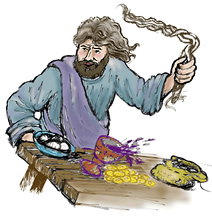
Jesus told his disciples a similar story to teach them about this kind of honesty. He told them about a wealthy man who had a manager in charge of his business and money. This manager was supposed to take care of his boss's affairs honestly, but instead he was using the man's money for himself - kind of like if someone was supposed to manage the school's fundraising money but spent it on video games instead. When the rich man discovered that his manager was wasting and stealing his money, he called him in and fired him immediately.
After telling this story, Jesus made one of the most important statements about character and integrity: "Whoever can be trusted with very little can also be trusted with much, and whoever is dishonest with very little will also be dishonest with much."
Let's think about what this means in your everyday life. If you're honest about small things - like admitting when you didn't do your homework instead of making up an excuse, or telling your parents the truth about what happened at school even when it might get you in trouble, or not taking that extra piece of candy when your teacher isn't looking - then people learn they can trust you with bigger responsibilities.
But if you're dishonest about little things - like lying about brushing your teeth, cheating on a small quiz, or not telling the whole truth about what happened during recess - then people start to wonder if they can trust you with anything important.
Here's something to think about: Have you ever had a friend who lied about small things? Did it make you wonder if they were telling the truth about bigger things? That's exactly what Jesus was talking about. Our character is like a muscle - the more we exercise honesty in small situations, the stronger our integrity becomes for big situations.
Consider these real-life scenarios: What if you found a $20 bill in the hallway at school? What if your teacher accidentally gave you a better grade than you deserved? What if your friend asked you to lie to their parents about where they were? What if you broke something at home and no one saw you do it? These might seem like small situations, but they're actually training moments for your character.
Theodore Roosevelt understood that integrity isn't about being perfect - it's about consistently choosing to do what's right, especially when it's difficult or costly. That's why he became one of our most respected presidents. People knew they could trust him because he had proven his honesty in countless small situations throughout his life.
The amazing thing about developing this kind of character is that it creates a positive cycle. When people know they can trust you with small things, they start giving you bigger opportunities and responsibilities. Teachers trust honest students with special jobs. Parents give more freedom to kids who consistently tell the truth. Coaches put reliable players in important game situations.
But remember, being honest isn't always easy, and it doesn't always feel good in the moment. Roosevelt could have kept that calf and been richer. Sometimes being honest means admitting mistakes, facing consequences, or missing out on something you want. But as Jesus taught us, this kind of integrity builds something far more valuable than any temporary gain - it builds a reputation and character that lasts a lifetime.
Dear Father, help us to understand that honesty isn't just about not lying - it's about having the courage to do what's right even when it's hard, even when no one is watching, and even when it costs us something. Help us to be like Jesus, who always spoke truth and lived with perfect integrity. Give us strength to be honest in every situation - big or small - so that we can grow into people others can trust completely. In Jesus' name we pray. Amen.
Activities + Resources
Teacher Reviews
Review this content
Share your thoughts with others
Teachers say
No reviews have been added yet, be the first to review!