Sermon
What's in Your Heart
Recommended Age:
Upper Elementary
Theme
God looks to see what's in your heart, not your purse.
Object
Several coins of various values from small to large and a bag of pennies to pass out to the children.
Scripture
"They all gave out of their wealth; but she, out of her poverty, put in everything—all she had to live on." (NIV)
I love going on walks around my neighborhood. Sometimes I'll spot a coin on the sidewalk - maybe a penny that someone dropped. Honestly? I used to just walk right past pennies because they seemed worthless. But what if I found a quarter, or even better, a twenty-dollar bill? I'd definitely stop for those! But here's something interesting I learned: that "worthless" penny is made of the same materials that make up more valuable coins. The difference isn't in what it's made of - it's in what we've decided it's worth.
Get the full Upper Elementary sermon
Upper Elementary object lessons are designed for 10-12 year olds. They offer an expanded version of the sermon with deeper explanations, discussion questions, real-world connections, and more challenging concepts.This happens with people too, doesn't it? At school, do you notice how some kids get treated differently based on what they wear, what phone they have, or what neighborhood they live in? Maybe there's a student whose family can afford the latest everything, and they seem to get more attention or invitations. Then there's another student whose clothes are from thrift stores, and somehow they get overlooked or even avoided. When you see a homeless person asking for help, do you look at them the same way you'd look at a successful business person in an expensive suit?
Here's what's really challenging about this: we all do it sometimes. Our brains are wired to make quick judgments, but Jesus shows us a completely different way to see people. In today's story, we're going to discover that God's math is totally different from the world's math.
Picture this scene: Jesus and his disciples are hanging out at the temple, which was like the center of religious life. There's this large offering box where people put their donations - kind of like when your church passes the offering plate, but this was a big, public display. As they're watching, some wealthy people walk up and make huge donations. We're talking about amounts that would be like someone today dropping $1,000 or even $10,000 into the offering. The disciples are probably thinking, "Wow! Look how generous these people are! God must be so impressed!"
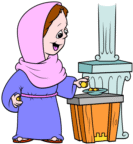
But then something unexpected happens. A poor widow approaches the box. In those days, widows had it really tough - no social security, no life insurance, often no way to earn money. This woman drops in just two tiny coins - the smallest coins available, worth less than a penny total. If you blinked, you might miss it.
Here's where it gets amazing: Jesus calls his disciples over and basically says, "Did you see that? She just gave more than everyone else combined." The disciples are probably confused, thinking, "Jesus, did you see those rich people? They gave thousands!" But Jesus explains: "Those wealthy people gave from their extra money - money they wouldn't even miss. But this woman gave everything she had to live on."
Think about this: if you have $100 and give $10, that's 10%. But if you only have $2 and give it all, that's 100%. Which takes more trust? Which shows more love? Jesus wasn't impressed by the dollar amount - he was looking at the heart behind the gift.
This story teaches us three powerful lessons. First, God doesn't measure our worth by our wallet. Some of the most amazing people I know don't have much money, but they're generous with their time, their kindness, their talents. Second, true generosity isn't about the amount - it's about the sacrifice. When you share your lunch with someone who forgot theirs, or spend your allowance on a gift for a friend, that might mean more to God than a millionaire's huge donation. Third, we need to see people the way Jesus sees them - not by their clothes, their house, or their stuff, but by their heart.
Here's what this looks like in your life: When a new student joins your class and doesn't have the "right" clothes or gadgets, will you be the person who makes them feel welcome? When you see someone being teased because their family doesn't have much money, will you stand up for them? When you have opportunities to give - whether it's money, time, or talents - will you give from your heart, not just from your leftovers?
I'm giving each of you a penny today, but I want you to think of it as priceless. This penny represents something important: in God's eyes, you have incredible value no matter what you own or don't own. And every person you meet - the popular kid, the quiet kid, the kid with holes in their shoes - they're all priceless too. When you look at this penny, remember that Jesus sees the heart, not the price tag.
The widow's gift challenges us to ask ourselves: What am I holding back from God? It might not be money - maybe it's my time when I could help others, my talents when I could use them to serve, or my voice when I could speak up for what's right. Real generosity starts in the heart and shows up in how we treat others.
Dear God, thank you that you don't judge us by our bank accounts, our clothes, or our possessions. Help us to see others the way you see them - as valuable, loved, and worthy of respect. Give us generous hearts that want to give our best to you and to others, not just our leftovers. Help us remember that true worth comes from you, not from what we own. In Jesus' name, Amen.
Activities + Resources
Teacher Reviews
Review this content
Share your thoughts with others
Teachers say
No reviews have been added yet, be the first to review!